Migrating your Go SMS application from Twilio to Plivo is a seamless and painless process. The two companies’ API structures, implementation mechanisms, XML structure, SMS message processing, and voice call processing are similar. We wrote this technical comparison so that you can scope between Twilio and Plivo APIs for a seamless migration.
Understanding the differences between Twilio and Plivo development
Most of the APIs and features that are available on Twilio are also available on Plivo and the implementation mechanism is easier as the steps involved are almost identical. This table gives a side-side comparison of the two companies’ features and APIs. An added advantage with Plivo is that not only can you code using the old familiar API/XML method, you can also implement your use cases using PHLO (Plivo High Level Objects), a visual workflow builder that lets you create workflows by dragging and dropping components onto a canvas - no coding required.
.highlight pre{ background-color: rgb(33, 33, 48); border-radius: 0; padding: 15px 18px 15px 18px; } pre.lineno{ color: #fff; opacity: .3; } .w-richtext figure { max-width: 100%; position: relative; }
| Features and APIs | Twilio | Plivo | Similarities | Implementation Interface |
| SMS API: Send SMS/MMS messages | ✅ | ✅ | Request and response variables’ structure |
API PHLO |
| Managed number pool for US/CA Messaging | Copilot | Powerpack | Feature parity |
API Console |
| Geo Permissions | ✅ | ✅ | Feature parity | Console |
| SMS Sender ID registration | ✅ | ✅ | Feature parity | Console |
| Number Lookup API | ✅ | ✅ | API Parity | API |
| Phone number management | ✅ | ✅ | Feature parity |
API Console |
| Validating Requests | ✅ | ✅ | Feature parity |
API XML |
| Subaccounts | ✅ | ✅ | Feature parity | API |
| HTTP callbacks | ✅ | ✅ | Feature parity |
API XML PHLO |
Plivo offers one unique advantage: Not only can you code using APIs and XML, you can also implement your use cases using PHLO (Plivo High Level Objects), a visual workflow builder that lets you create workflows by dragging and dropping components onto a canvas - no coding required.
Plivo account creation
Start by signing up for a free trial account that you can use to experiment with and learn about our services. The free trial account comes with free credits, and you can add more as you go along. You can also add a phone number to your account to start testing the full range of our voice and SMS features. A page in our support portal walks you through the signup process.
You can also port your numbers from Twilio to Plivo, as we explain in this guide.
Migrating your Go SMS application
You can migrate your existing application from Twilio to Plivo by refactoring the code, or you can try our intuitive visual workflow builder PHLO. To continue working with the APIs, use one of the quickstart guides to set up a development environment for your preferred language. Plivo offers server SDKs in seven languages: Python, Node.js, .NET, Java, Python, Ruby, and Go. For another alternative that lets you evaluate Plivo’s SMS APIs and their request and response structure, use our Postman collections.
How to send an SMS message
Let’s take a look at the process of refactoring the code to migrate your app from Twilio to Plivo to set up a simple Go application to send an SMS message by changing just a few lines of code.
| Twilio | Plivo |
|
|
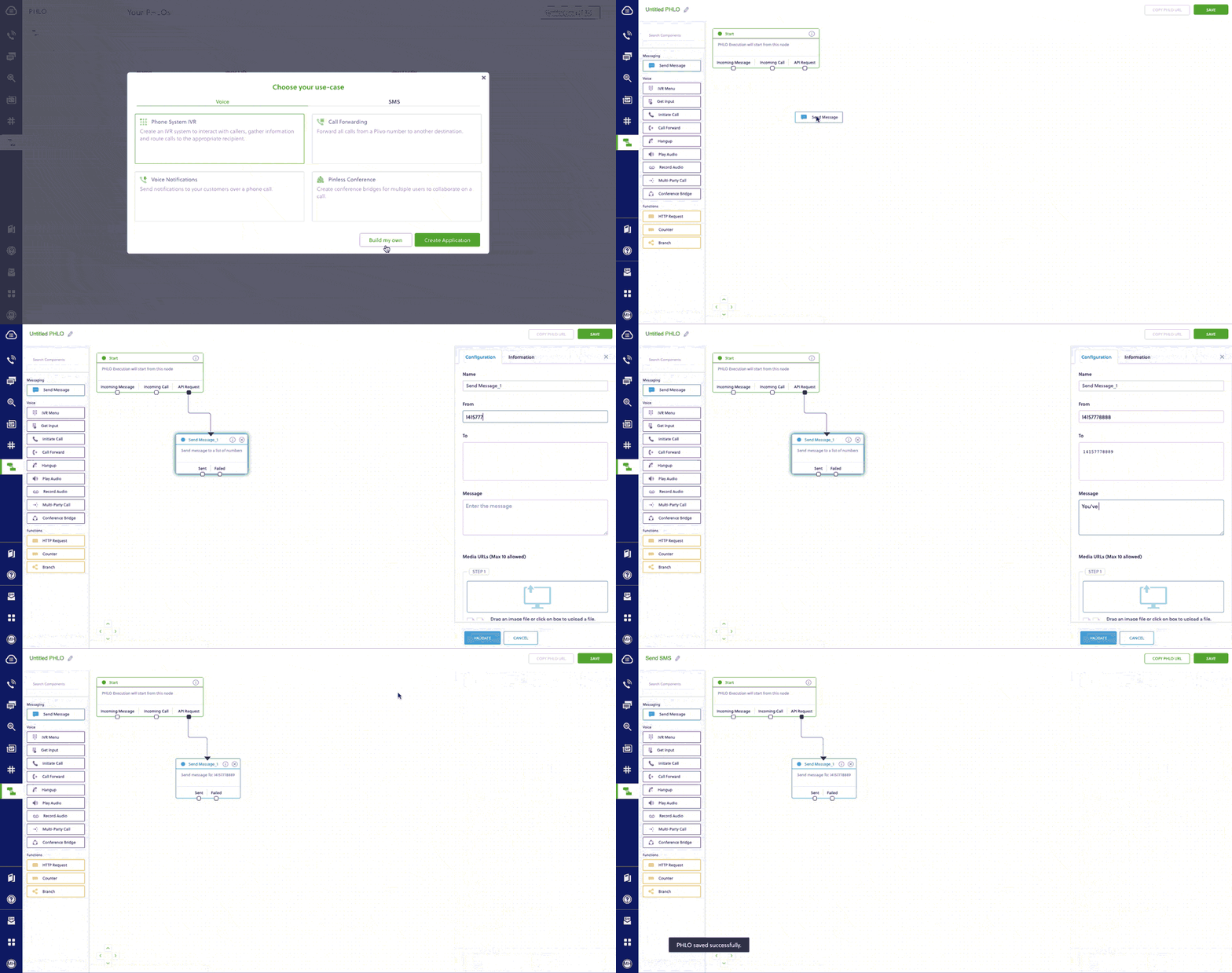
Alternatively, you can implement the same functionality using one of our PHLO templates. For example, if you want to send an SMS message, your PHLO would be this:
How to receive and reply to SMS
You can migrate an application for receiving and replying to an incoming SMS from Twilio to Plivo just as seamlessly, as in this example:
| Twilio | Plivo |
|
|
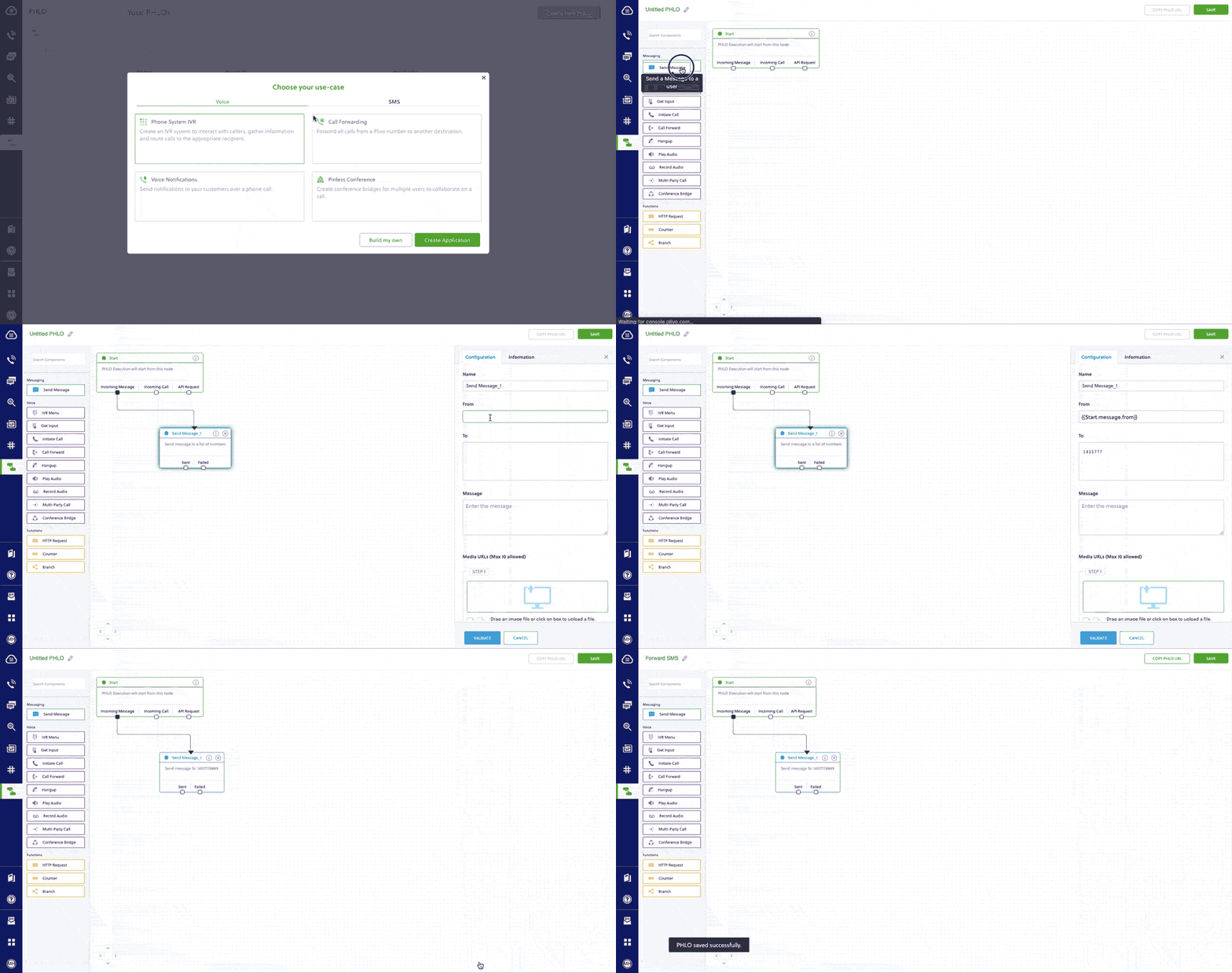
Here again, you can implement the same functionality using one of our PHLO templates. Your PHLO would look like:
For more information about migrating your SMS applications to Plivo, check out our detailed use case guides, available for all seven programming languages and PHLO.
How to send an MMS message
Let’s take a look at the process of refactoring the code to migrate your app from Twilio to Plivo to set up a simple Go application to send an MMS message by changing just a few lines of code.
| Twilio | Plivo |
|
|


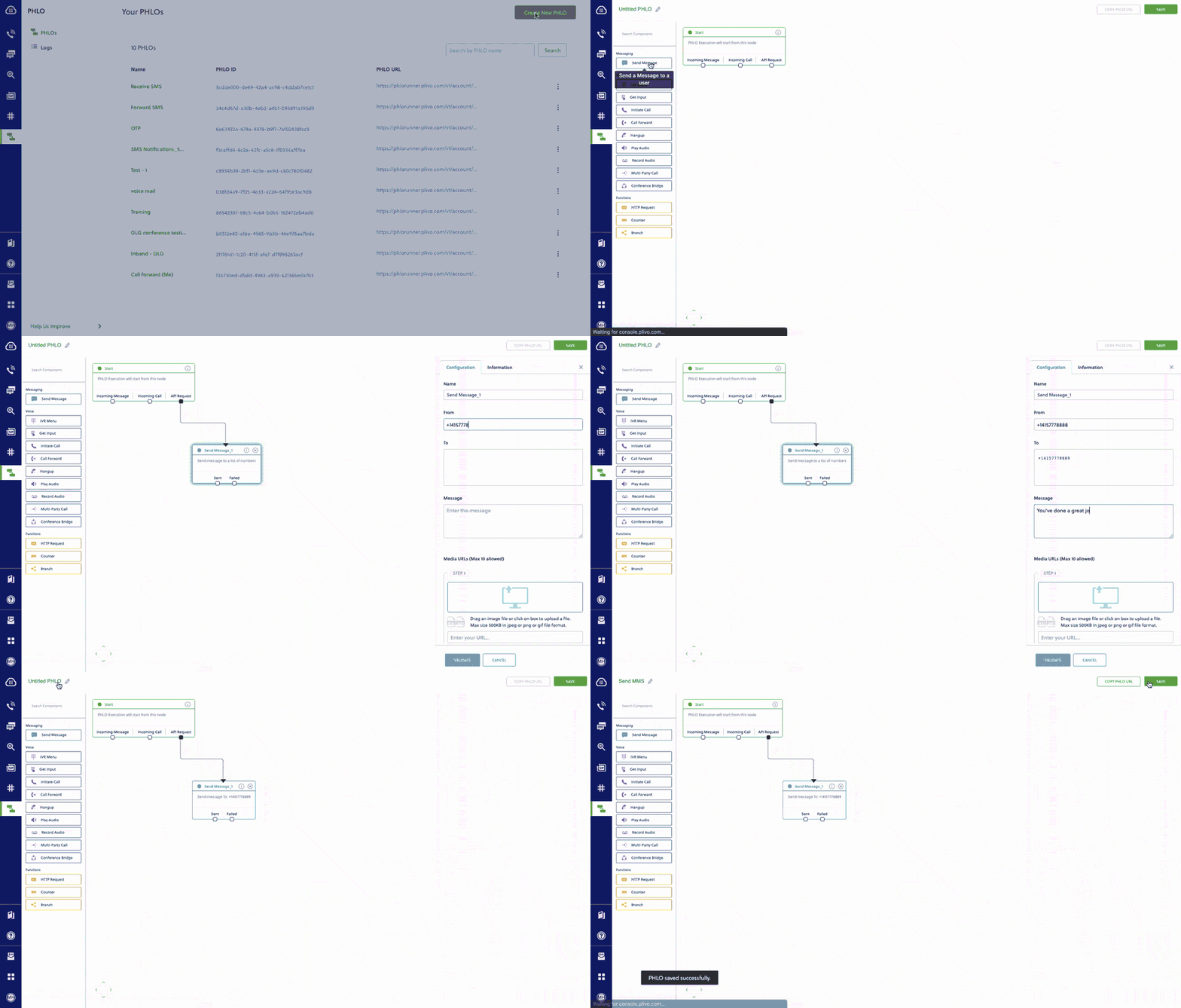
Alternatively, you can implement the same functionality using one of our PHLO templates. For example, if you want to send an MMS message, your PHLO would be this:
More use cases
You can migrate your applications serving other use cases too.
- Two-factor authentication
- Forward incoming SMS
- Delivery reports
- SMS alerts
- SMS marketing
- SMS notifications
- SMS survey
- SMS autoresponder
- Forward SMS to email
- Receive MMS
Simple and reliable
And that’s all there is to migrate your Go SMS app from Twilio to Plivo. Our simple APIs work in tandem with our Premium Communications Network to guarantee the highest possible delivery rates and the shortest possible delivery times for your SMS messages. See for yourself - sign up for a free trial account.